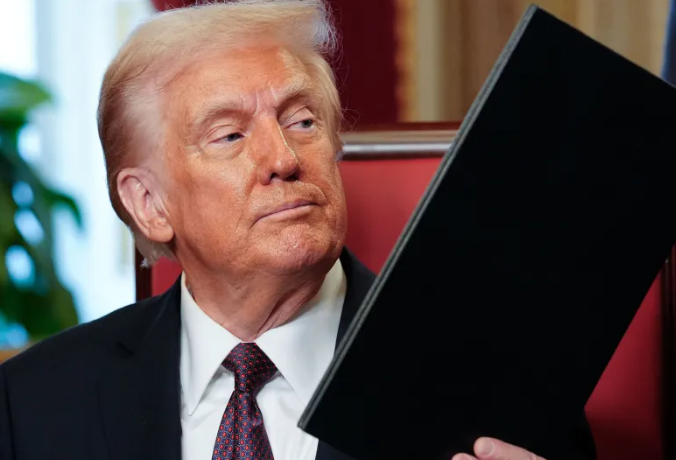
Just hours after being sworn in for his second term, President Donald Trump signed an executive order aimed at increasing control over the federal workforce, a move he often refers to as combating the so-called “Deep State.”
The controversial measure effectively reverses decisions made by former President Joe Biden in support of federal employees and reinstates a similar order issued by Trump prior to the 2020 election.
What Is “Schedule F”?
The executive order introduces a new employment category within the federal workforce called “Schedule F.” Under this classification, employees will be deemed political appointees, making it easier for them to be fired.
This change grants Trump and his appointees greater leeway to hire and dismiss federal employees deemed “disloyal.” Critics argue this politicizes the civil service, potentially allowing career employees to be replaced with individuals aligned with the administration’s policies.
Initial estimates suggest that “Schedule F” could apply to roughly 50,000 employees, but experts warn the real number may be significantly higher.
Federal Unions Push Back
The move has alarmed federal unions and employee advocacy groups. Everett Kelley, National President of the American Federation of Government Employees, described the order as a blatant attempt to “corrupt the federal government by removing due process rights” for employees.
Similarly, the National Treasury Employees Union (NTEU), which represents 150,000 workers, has vowed to fight the measure. “The American people deserve government services delivered by skilled, nonpartisan professionals,” said NTEU President Doreen Greenwald.
Anxiety Among Federal Workers
The executive order has sparked anxiety among federal employees, many of whom fear being targeted or reassigned under the new classification.
An attorney with the Department of Homeland Security (DHS), speaking anonymously, expressed concerns about being unable to perform their duties without fear of reprisal. “After nearly 20 years of federal service, I’ve never felt this level of anxiety about my job,” they said.
Others are preparing for the possibility of being fired or reassigned. “I won’t succumb to the chilling effect,” said one Department of Veterans Affairs employee, noting they are willing to leave or be dismissed rather than compromise their values.
Critics Warn of Regression
Opponents argue that the “Schedule F” order rolls back over 140 years of labor reforms, reverting to a time when political loyalty outweighed merit in federal hiring.
Max Stier, CEO of the Partnership for Public Service, called the effort to undermine an apolitical and merit-based civil service a “grave mistake” that would harm the federal government’s ability to effectively serve the public.
The Path Forward
The NTEU has already filed a lawsuit to challenge the executive order, with legal experts noting that overturning or revising such a rule typically requires a lengthy process.
Despite the legal battles ahead, the anxiety and uncertainty among federal employees are palpable, with many bracing for significant changes in their workplace dynamics.
As the debate over “Schedule F” unfolds, the spotlight remains on its long-term implications for the federal workforce and the broader functioning of the U.S. government.